Mayan Beekeeping
As far back as 3,000 years ago, the ancient Maya practiced beekeeping. Their cultivation of sacred stingless bees provided both pollination for their crops and honey to use in food, rituals and medicine. For the Maya, beekeeping was not a mere agricultural task; it was a sacred bridge between the human and divine. This was such an important practice, of the two Codices that survived the Spanish conquest, the Madrid Codex contains detailed illustrations of beekeeping practices.
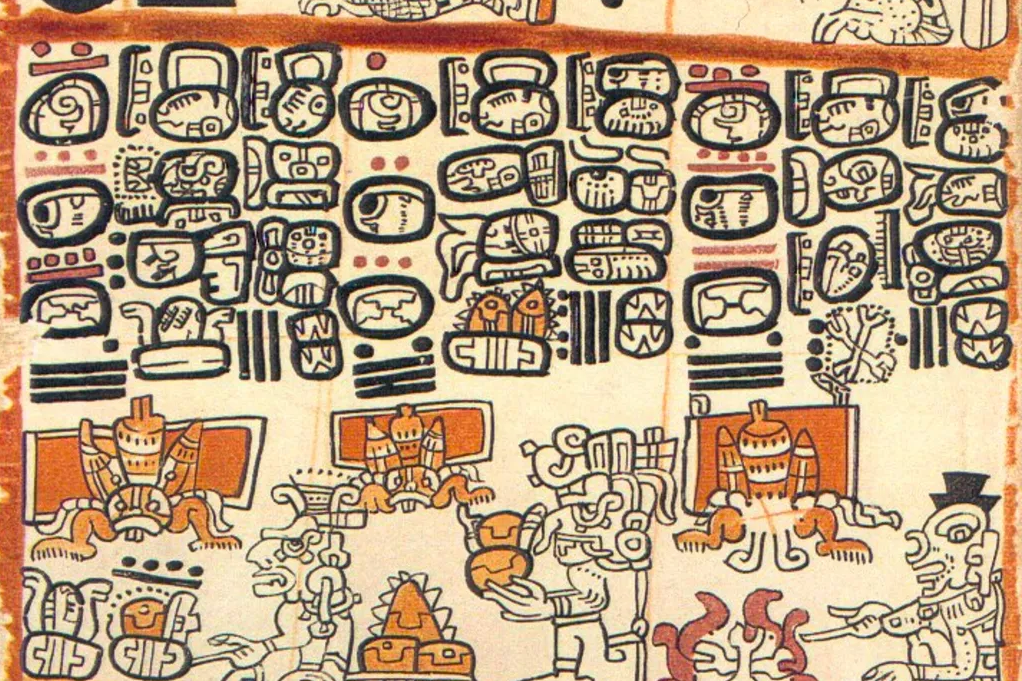
While the rest of the world navigated the Middle Ages, Maya practitioners were already masters of meliponiculture, managing thousands of hives in hollowed-out logs called jobones. This cultivation is still emulated in the Yucatán Peninsula today. This is a legacy of profound ecological stewardship; a thousand-year-old partnership where humans and bees evolved together in a relationship of mutual respect and spiritual significance.
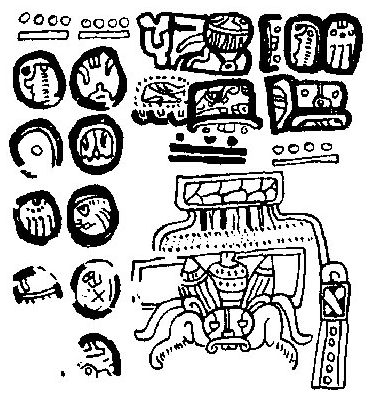
The Pillars of Mayan Beekeeping
The Sacred Jobón
The jobón is the hollowed-out log that serves as the hive’s body. Traditionally crafted from cedar or mahogany, with each end sealed with a removable stone disc or wooden plug, often plastered with mud or lime to create a climate-controlled sanctuary for the bees. It is more than a container; it is a sacred architecture. The stingless bees (Melipona) are highly sensitive to their environment, and the hard woods density provides the precise thermal regulation and protection they need to thrive. A jobón is often decades old, its wood seasoned by the propolis and wax of countless generations of bees, making it a physical bridge between the palero’s ancestors and the current hive.
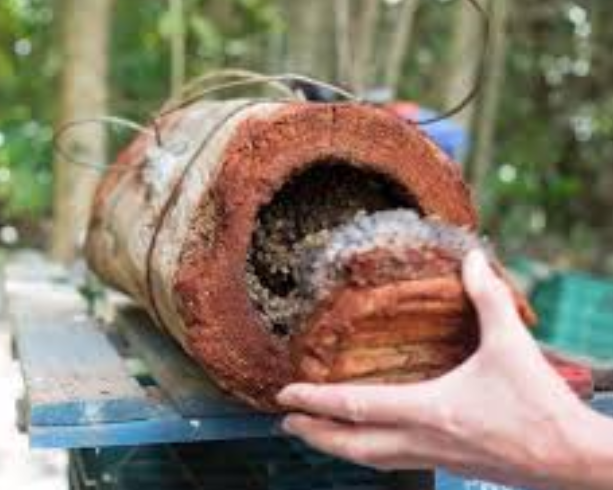
These horizontal logs are stacked in tiered wooden racks called meliponarios, protected by thatched roofs from the tropical sun and rain.
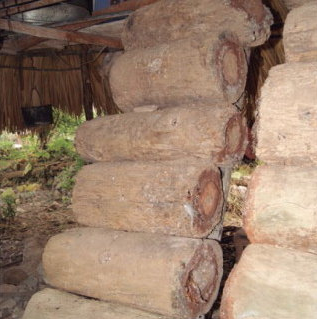
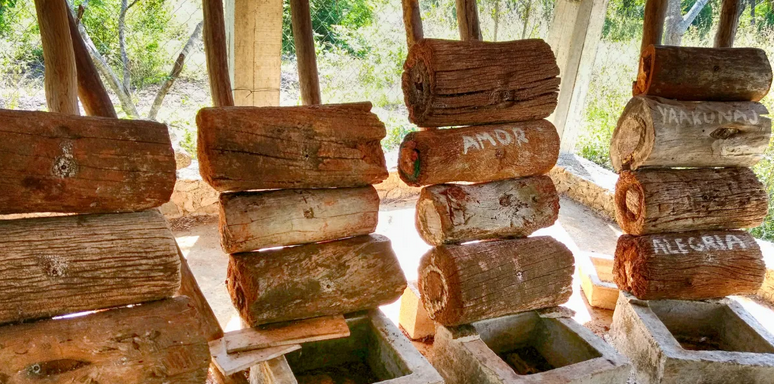
It is designed to be opened only twice a year for harvest, ensuring the bees remain undisturbed in a dark, cool environment that mimics her natural forest habitat.
Ritual Harvest
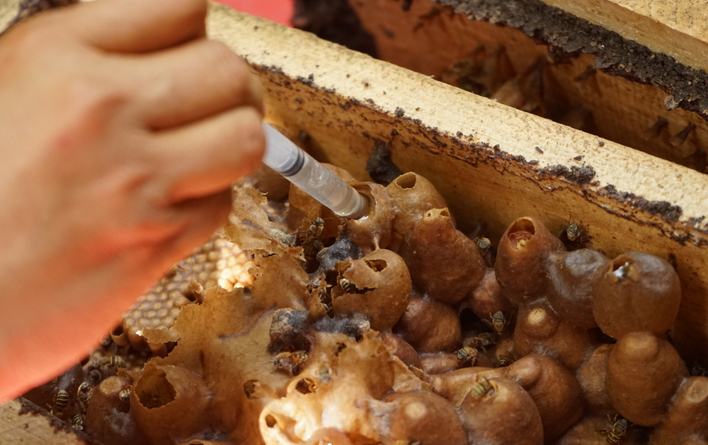
The extraction of honey was, and often still is, accompanied by ceremonies, reflecting the belief that the bees are messengers between the earth and the heavens. Unlike commercial harvesting, which prioritizes volume, the Ritual Harvest is governed by the lunar cycle and specific ceremonies. The palero asks the bees for permission before opening the jobón, often offering incense or prayers. This ritual ensures that the harvest never compromises the hive's survival; only the surplus is taken, reinforcing the "family member" status of the bees. It is a moment of gratitude that balances the human need for honey and wax with the bees' need for stability.
A Living Heirloom
In its totality, meliponiculture transcends agriculture into a lineage-based stewardship. Unlike industrial beekeeping, where colonies are often treated as replaceable units of production, the palero (traditional beekeeper) views the hive as a sentient repository of ancestral wisdom. The transition of a hive from teacher to apprentice is not a commercial transaction but a rite of passage, signifying that the student is now ready to protect the genetic and spiritual "memory" of the bees. By integrating the hive into the family structure, the palero ensures that the bees’ survival is inextricably linked to the family’s own history, creating a profound sense of duty that transcends seasonal yields.
This intimate relationship is sustained through a deep, observational knowledge known only to those within the lineage. An apprentice does not just learn the mechanics of honey extraction; they learn to interpret the specific "moods" and "languages" of their family’s unique colonies. This biological inheritance—the Living Heirloom—is often preserved for generations, with some hives staying within a single family for over a century. In this context, the death of a colony is mourned as the loss of a relative, reinforcing a conservation ethic where the health of the hive is the primary measure of a palero’s success and standing in the community.