The Kapok Tree
Ceiba pentandra
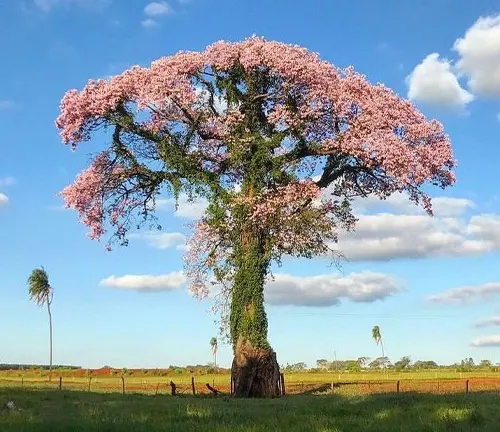
The Kapok Tree is the Maya sacred symbol of the Universe, and an iconic tree of the Yucatán. It is a towering tropical species that produces abundant nectar, making it a key resource for nectar-feeding bats. Its large flowers are adapted to attract bats, and it serves as a critical food source during the dry season when other resources are scarce. The kapok tree produces large, showy flowers that range from creamy white to red, typically blooming during its leafless period.
The Tree
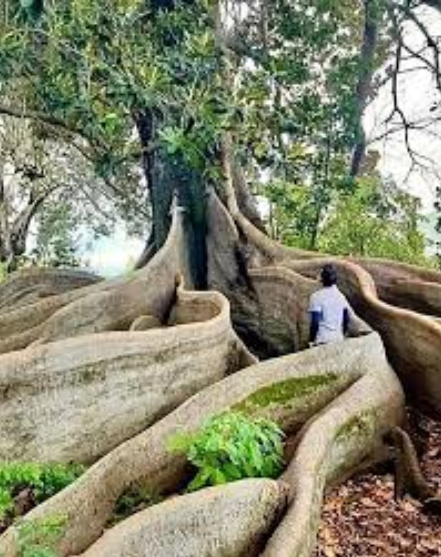
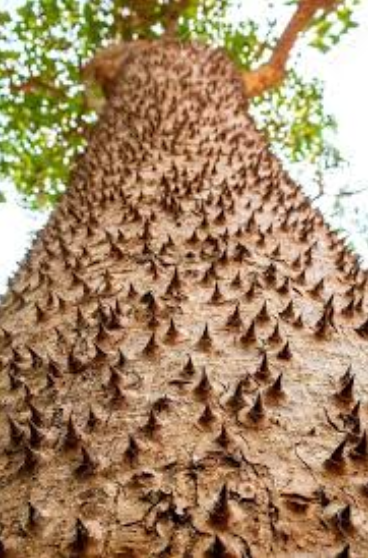
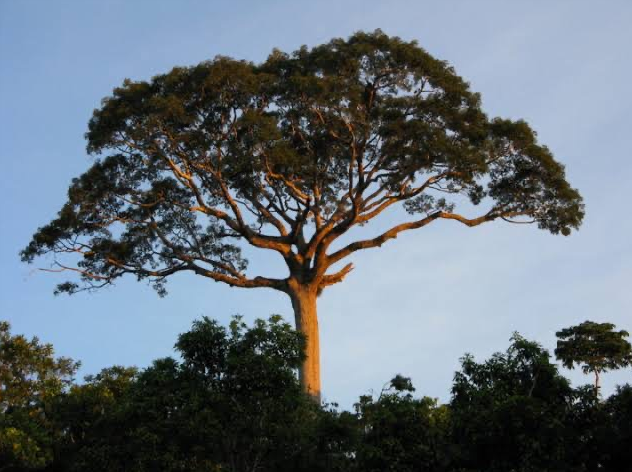
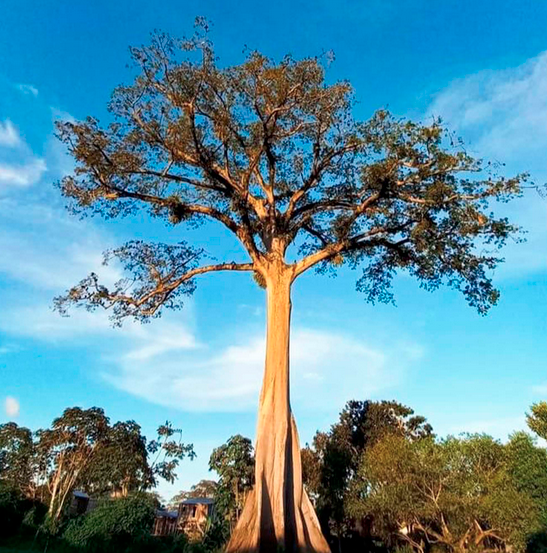
The Kapok tree is a majestic emergent giant of the tropical rainforest, often reaching heights of 150 to 200 feet. It is characterized by a straight, cylindrical trunk that can grow up to 9 feet in diameter, supported by massive, plank-like buttress roots that can extend many meters from the base. The bark of younger trees is often green and covered with large, conical thorns, which tend to disappear as the tree matures and the bark becomes gray and smooth. Its crown is typically broad and flat-topped, with horizontal branches arranged in tiers, providing a distinct architectural silhouette against the forest canopy.
The Leaves
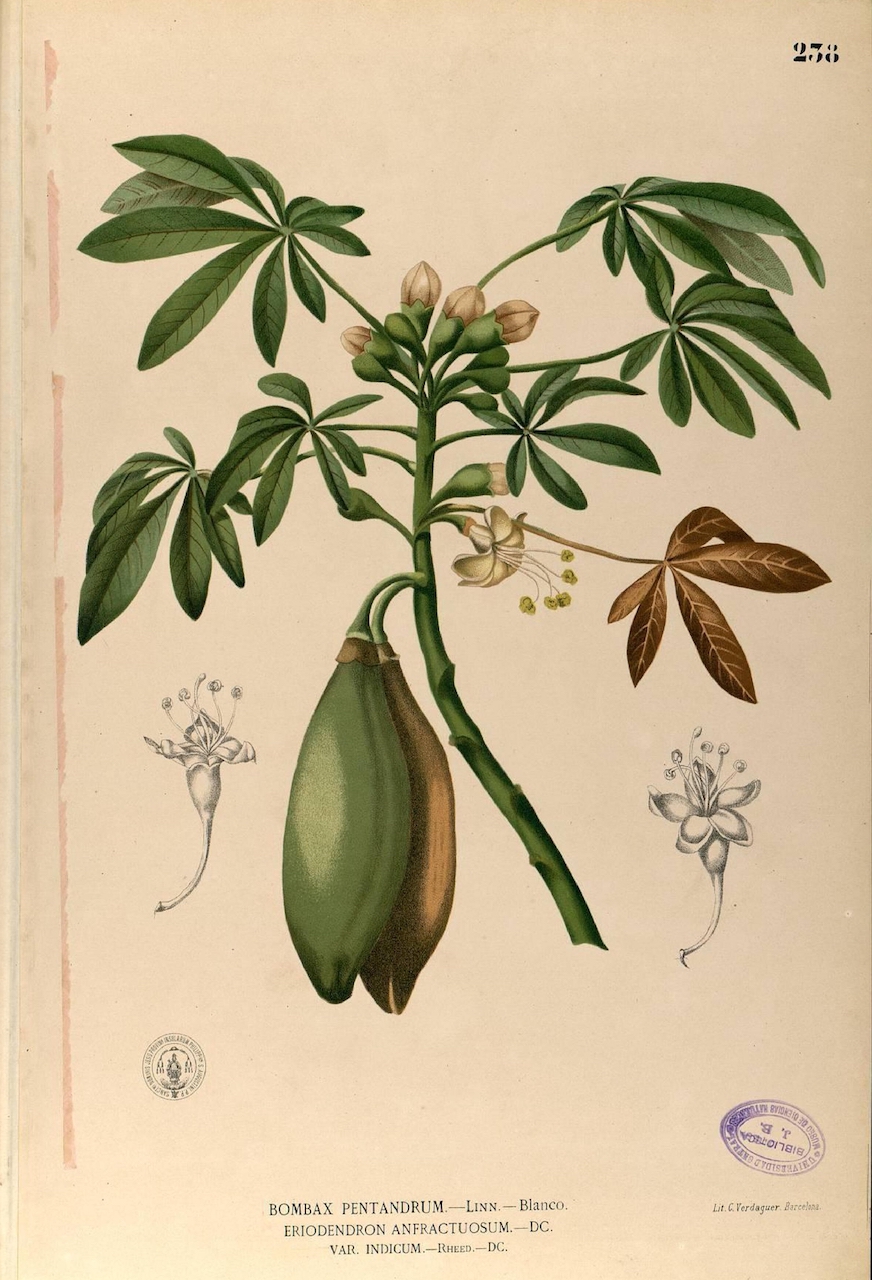
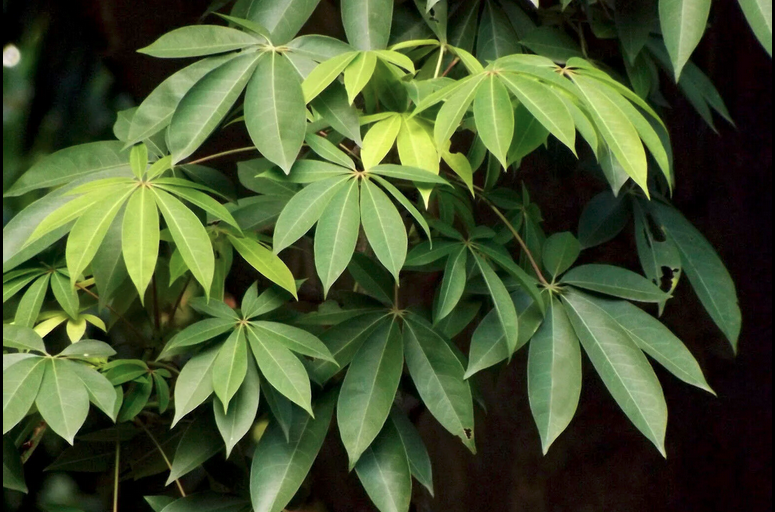
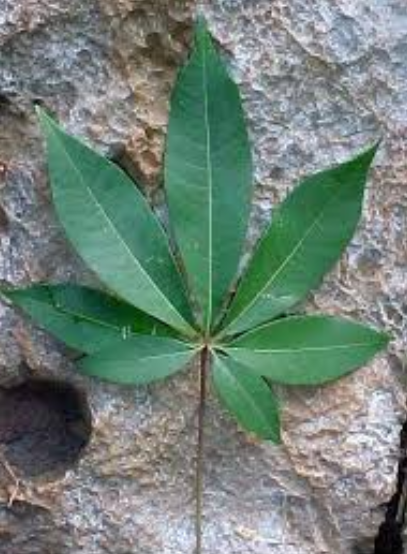
The foliage of the Kapok is deciduous, meaning the tree sheds its leaves during the dry season to conserve water. The leaves are palmately compound, resembling the shape of an open hand, with five to nine leaflets radiating from a central point on a long petiole. Each individual leaflet is lanceolate or oblong in shape, featuring smooth margins and a pointed tip. This arrangement allows the tree to capture sunlight efficiently while minimizing wind resistance during tropical storms.
The Flowers
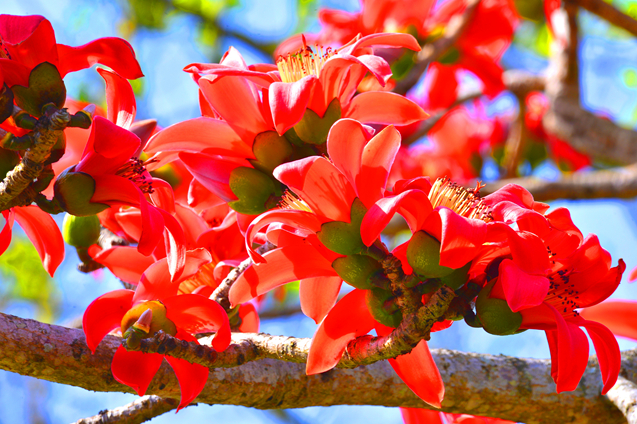
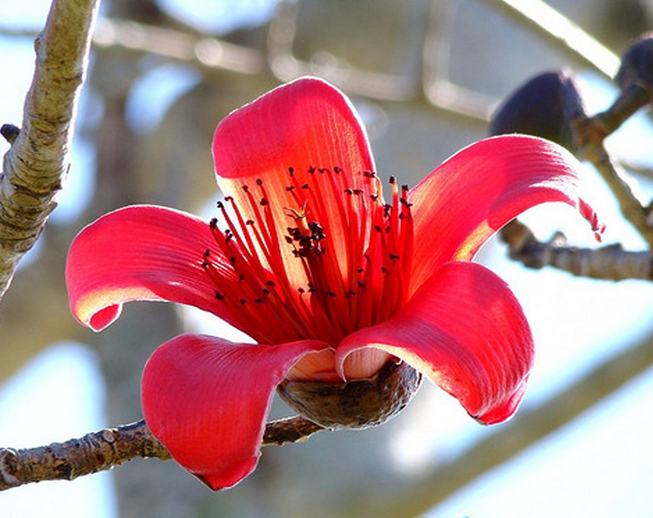
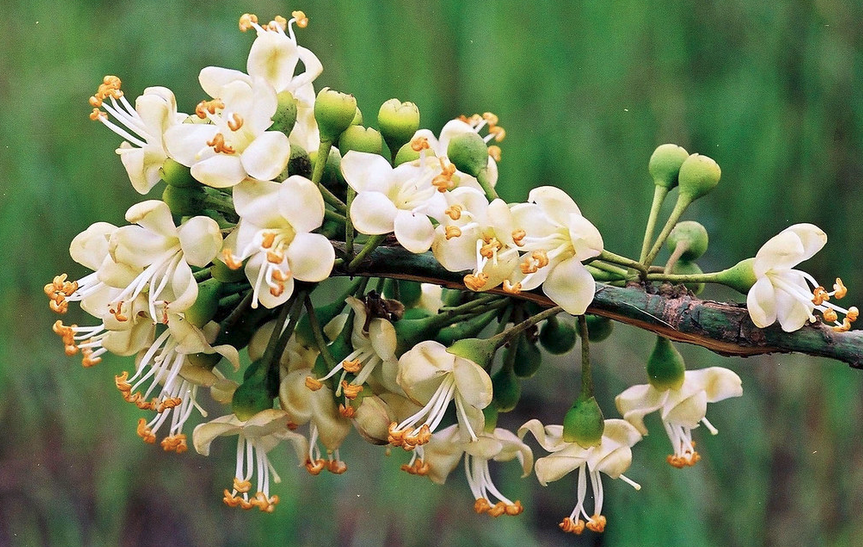
Flowering usually occurs when the tree is leafless, making the blossoms highly visible to pollinators. The flowers are relatively small, about one to two inches long, and grow in clusters on the branches. They possess five petals that range in color from creamy white to pale pink to red, often accompanied by a pungent, milky odor that is particularly attractive to bats, its primary pollinators. These nocturnal blooms open in the late afternoon and produce copious amounts of nectar, falling to the forest floor shortly after they have been visited.
The Seeds
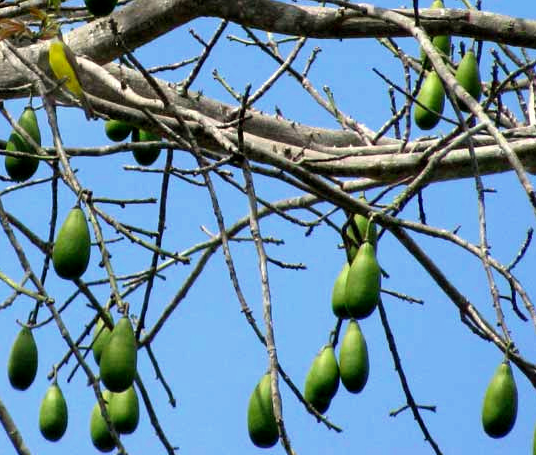
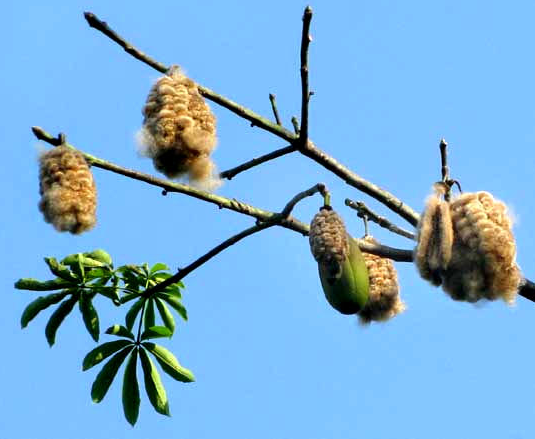
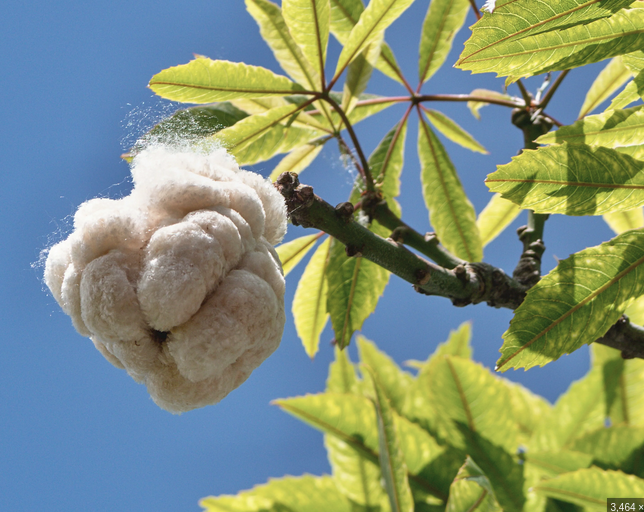
Following pollination, the tree produces large, woody, capsule-like pods that are approximately six inches long. When these pods ripen and burst open, they reveal numerous small, brown, ovoid seeds embedded in a dense mass of silky, yellowish-white fibers known as kapok. These lightweight, hollow fibers are highly buoyant and water-resistant, acting as parachutes that allow the wind to carry the seeds over vast distances. While the fibers are too slippery for spinning into yarn, they are historically prized as a superior stuffing material for life jackets, pillows, and mattresses.