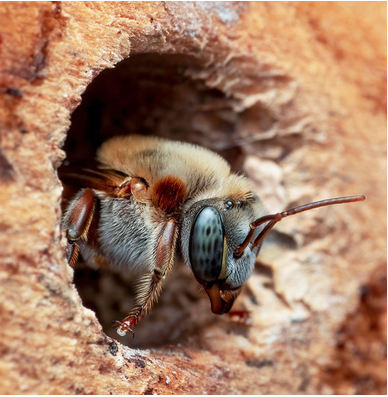
Las Abejas
The Buzzard Bee's Shape
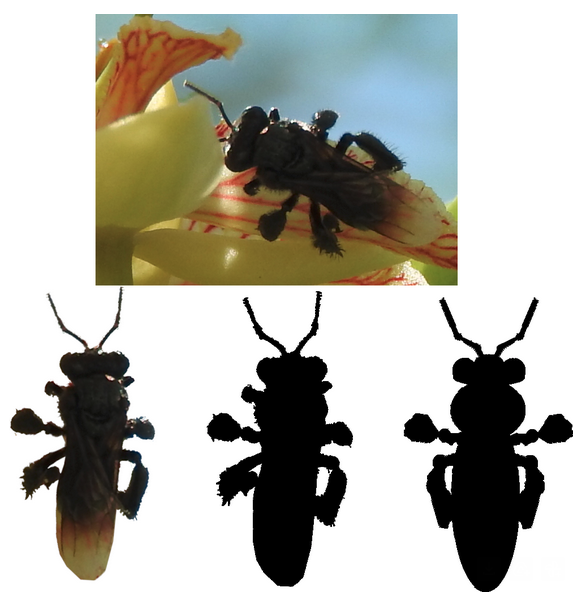
This first picture is of my favorite bee, Saak Xic (frieseomelitta nigra). At the top is the origin photo of the bee, from an overhead perspective. Below it, I tinkered with it and got the bee to align vertically, then added a silhouette, and then finally a reconstruction using squares and circles with more symmetry (just an exploration). I think the overhead perspective of the bee has a very strong shape. It's wings are folded uniformly, though I do not have the talent to show the white tips or the veins of black transgressing the white tips. I do like the fuzzy or ragged edges of the back legs where it collects some pollen. The photo, if you look closely, shows interesting textures to explore.
Ah Muzen Cab, The Descending God
Ah Muzen Cab is strongly associated with the bees (specifically Xunaan Kab melipona beecheii), honey, and the Earth. He is prevalent around the architecture and frescoes of Tulum, He is unique in that he is nearly always presented "upside down," or "diving" toward the Earth. This is interpreted to be a bee coming down to land, the Sun setting, and diving into the underworld to free life forces for the Mayas and their World. His head faces the viewer, wings often outstretched, legs bent at the hips, and his hands almost always holding one or more things. He has a tail, usually in the form of a segmented skirt.
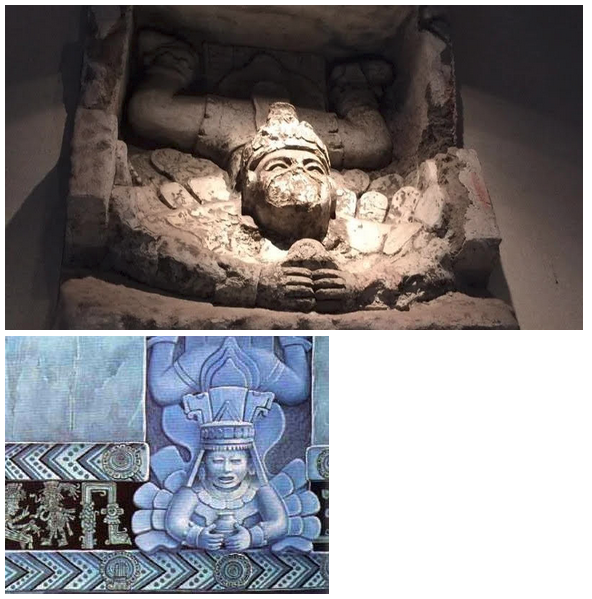
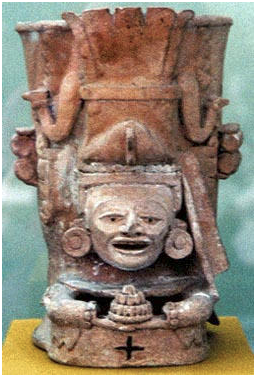
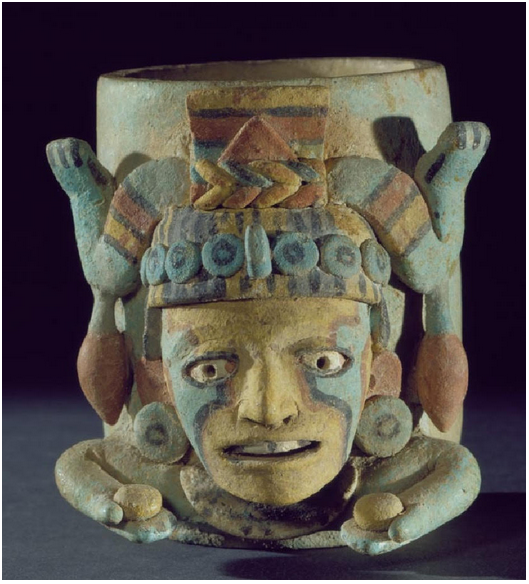
This "diving" position also directly reflects the positioning and anatomy of the Xunaan Kab bees in the Madrid Codex, reinforcing our interpretation of this God's association with the bees. When holding a cup full of small "ball" shapes in a geometric pattern, it indicates honey. You can see it in this pre-columbian vessel.
The Mayan Colors
You mentioned there is a color pallette strongly associated with the Mayan arts (including a special Blue pigment). In the following picture, what I really like are those colors and their application on this chalice. Though I am certain, when freshly painted, these colors/pigments were more saturated and vibrant.
The Madrid Codex: The Bee Almanac
Within the Madrid Codex, there is an Almanac of Beekeeping. It is filled with glyphs relating to the health, keeping, and rituals surrounding cultivation of the Melopona: Xunaan Kab (melipona beecheii). One of my favorite depictions of the "Royal Lady" is from the Codex, page 103 image "c". At the lower right of the image is the bee, with its thorax tipping up behind it, its wings to the left and right of its thorax, and behind the bee is a thatch-roofed structure. That structure may be indicative of the protective structure used to this day, filled with stacks of Jobóns (hives), but it is just as likely that this structure was representative of a person's house. I adore this idea that the Mayanos still to this day are keeping hives within their own homes to take care of the bees.
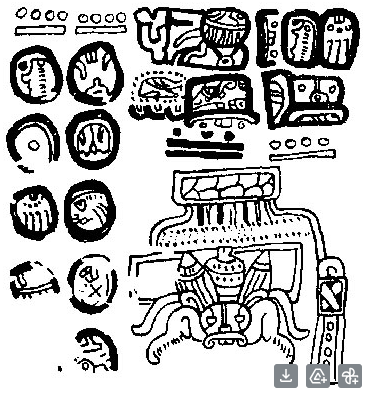
While the colors have been removed in this catalog, the pictures are a great source of the Maya writings and glyphs. In this next image, the two glyphs at the bottom are translated as "tasty tamales!" I think anyone would appreciate such an offering.
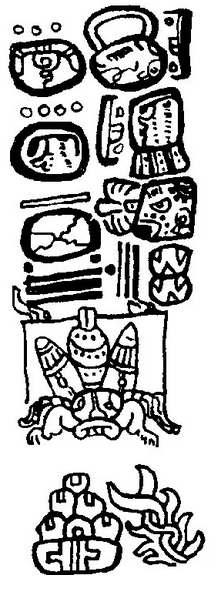
If you would like to see ALL the codex pages of the almanac of beekeeping as a source for imagery, go here: http://mayacodices.org/, and search the word "bees." There is a lot to draw from there, but note: there are several entries showing a bee without a head! Those pics are part of the almanac having to do with bad hive conditions, colony deaths, etc.
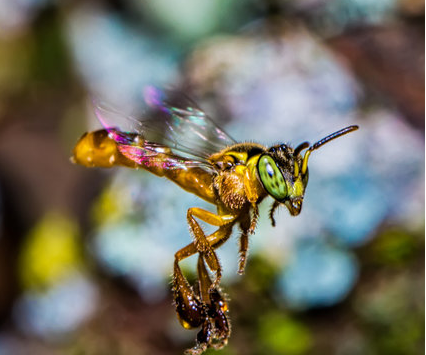
Jatai's hovering pose and colorful wings
Jatai's got green eyes sort of like Yaax Ich, but also has a long skinny body, and wings colored like an oil slick when the light hits it. He's a really great "starter bee" that does well on balconies of ornamental flowers. Truly an angelito!
Yaax Ich's Green Eyes
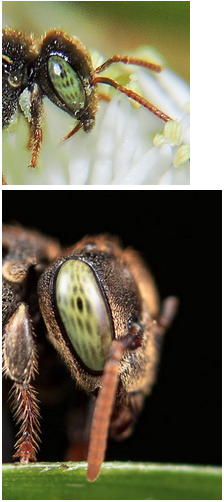
Yaax Ich's green eyes are super chido! The structure of the eye is the same for Xunaan Kab, but theirs are gray