Plateau Goldeneye
| Scientific name | Mayan name | Español | English |
|---|---|---|---|
| Viguiera dentata | Taj | Chimalacate | Plateau Goldeneye |
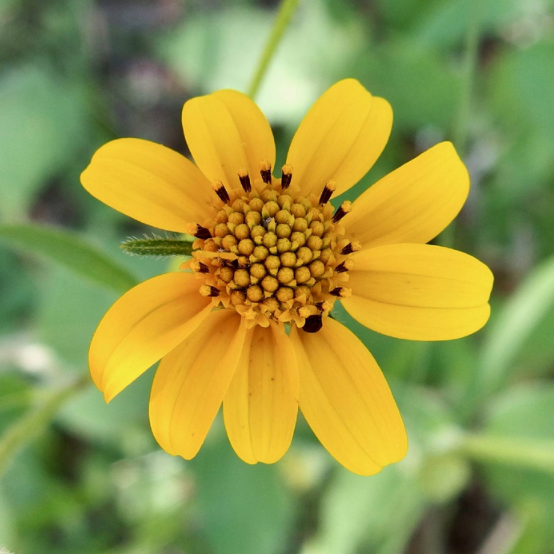
Plant
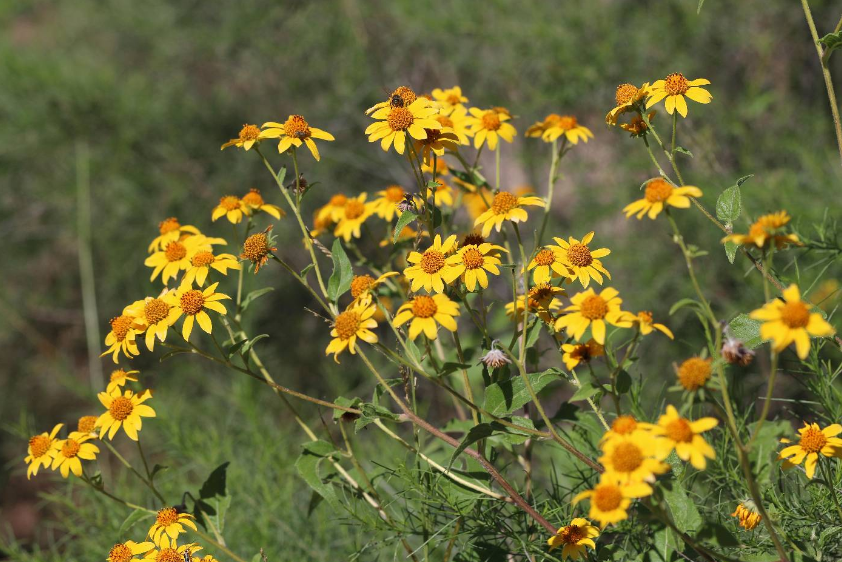
A bushy, multi-branched plant that typically grows 3 to 6 feet tall. It grows shorter and more compact in full sun but can become tall and "leggy" in partial shade. It is extremely drought-tolerant and thrives in poor, rocky, or calcareous soils.
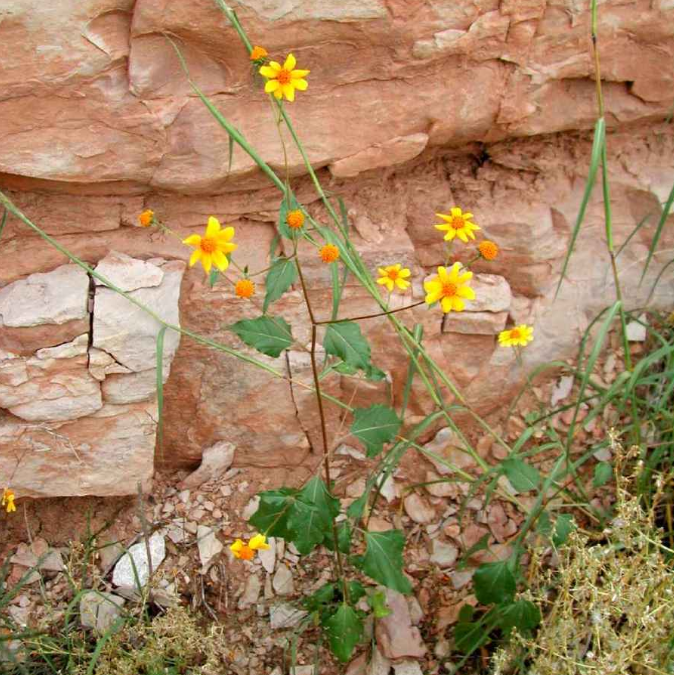
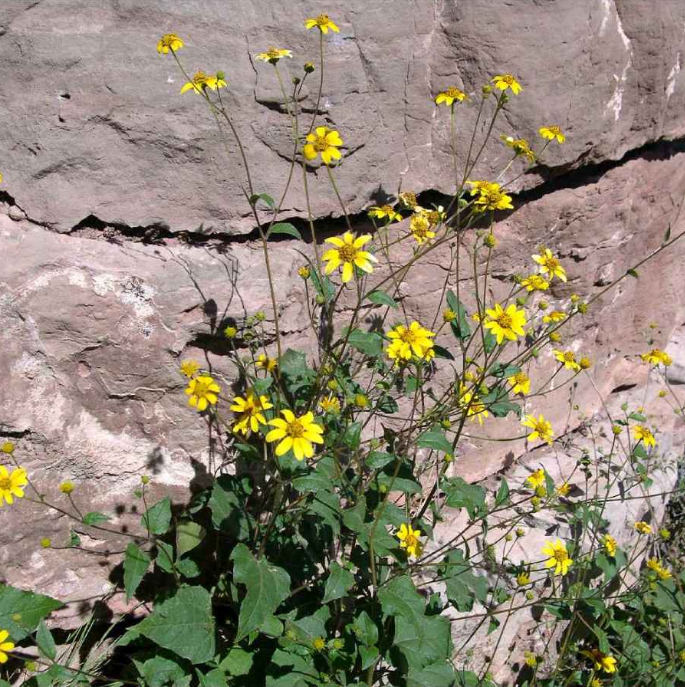
Leaves
Its leaves are triangular to lance-shaped with a sandpaper-like, hairy texture and distinct serrated (toothed) edges. During the Mayan festival of Ch'a Cha'ak, the leaves are used to cover tamales.
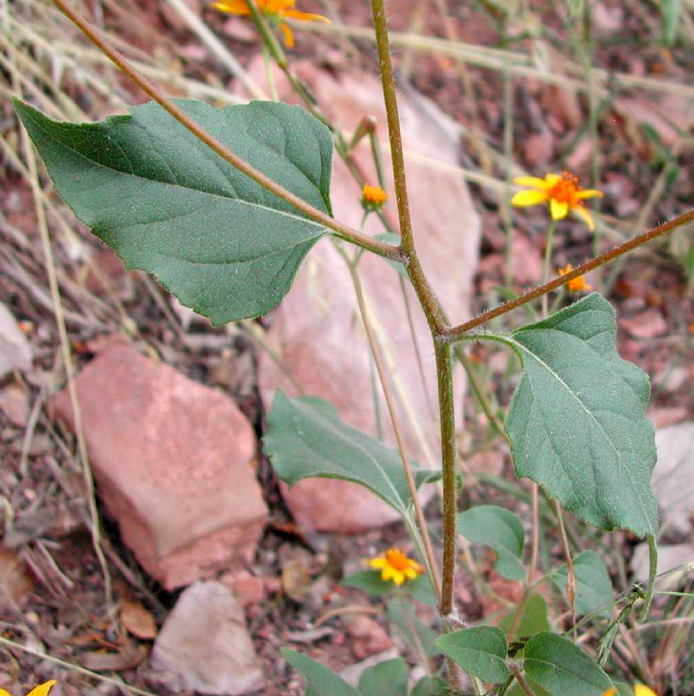
Flowers
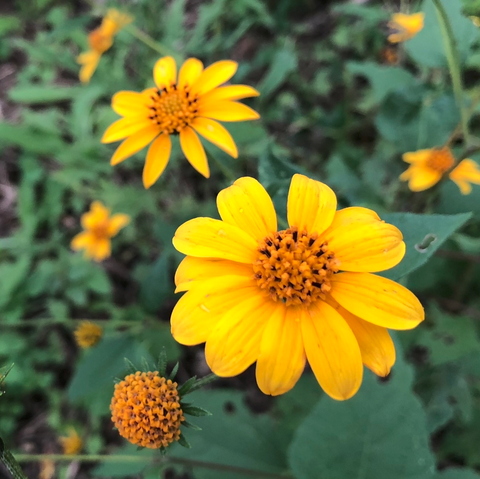
Bright yellow, daisy-like heads approximately 1.5 inches wide. They bloom profusely from June through October, appearing at the ends of long, slender stalks. The flowers are a major nectar source for bees and butterflies, including the Cassius Blue and Bordered Patch butterflies.
Fruit
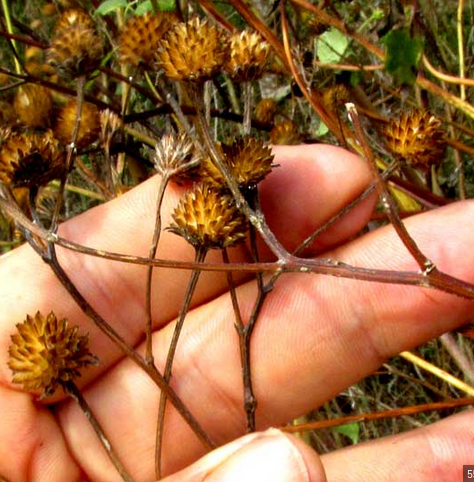
A small, dry, one-seeded fruit called a cypsela, which is often topped with a pappus (bristles or scales) to aid in wind dispersal.
Medicine!
Infusions of the aerial parts are used to treat baby rash. Scientific studies have identified compounds in the plant with antifungal and antibacterial properties. The flowers are renowned for attracting a variety of pollinators, including bees and butterflies, and producing high quality honey.