Siricote
| Scientific name | Mayan name | Español | English |
|---|---|---|---|
| Cordia dodecandra | K'oopte | Siricote | Siricote |
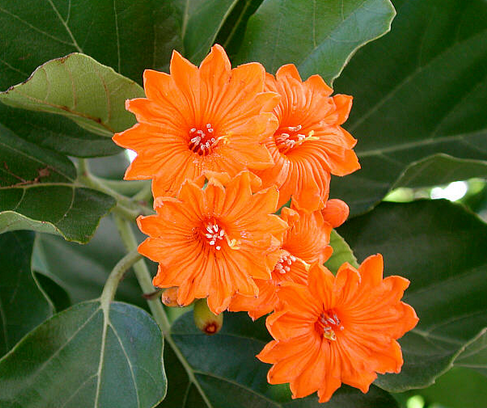
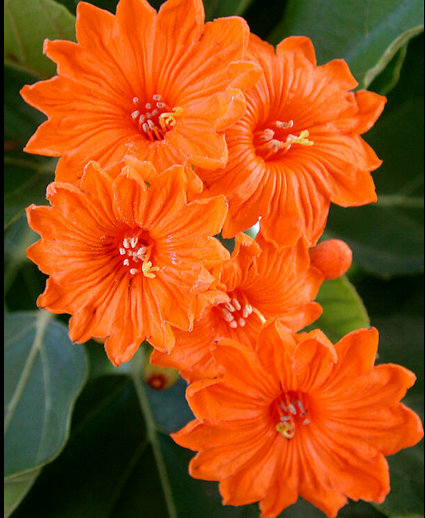
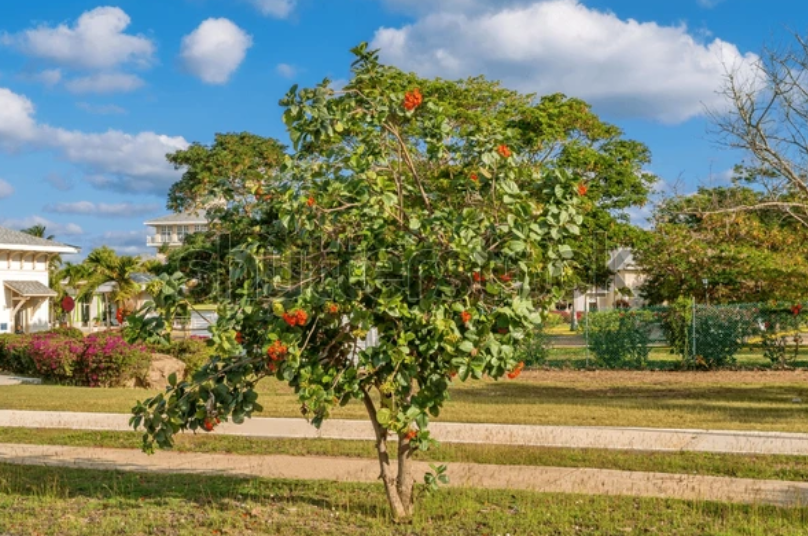
This is perhaps the most important hummingbird plant in the Yucatán. It produces vibrant orange, trumpet-shaped flowers. It is a "high-strength" resource because it offers a large volume of nectar, making it a primary energy source for species like the Cinnamon Hummingbird and the Canivet's Emerald.
The Flowers
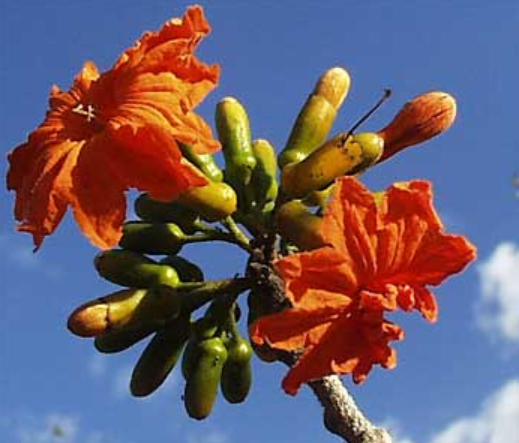
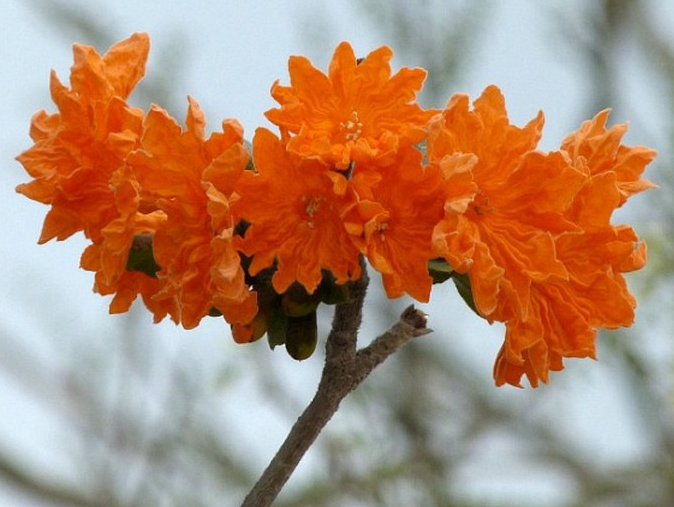
The Siricote tree produces striking, trumpet-shaped flowers that grow in bright orange or reddish clusters at the ends of its branches. Unlike many common flowers that have only five or six petals, these blossoms are unique because they have between 12 and 17 petals fused together, giving them a full, ruffled look similar to crinkled tissue paper. The base of the flower is protected by a tough, ribbed tube covered in tiny, rust-colored hairs. Inside, the flower is perfectly shaped for a hummingbird's beak, with a long "throat" that hides the nectar and a pollen-bearing structure that splits into four tips at the top to ensure it brushes against any visiting birds.
The Fruit
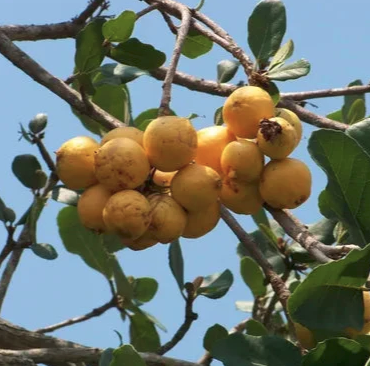
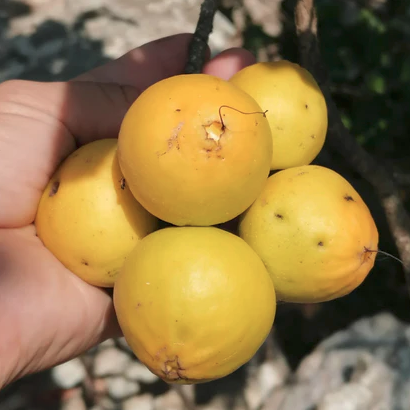
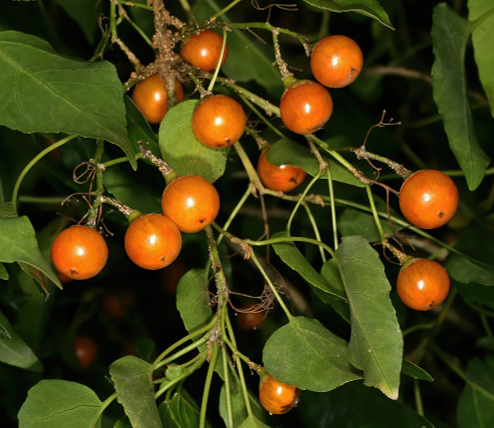
The fruit of the Siricote is a yellow-to-cream colored drupe, about 3 to 5 cm long, featuring a thick, fibrous skin and a notably mucilaginous (sticky/slimy) pulp. While the raw fruit is edible, its high acidity and astringency mean it is almost exclusively consumed as a preserve. In this traditional Yucatecan preparation, the fruits are soaked in lime water to firm the flesh before being slow-cooked in a heavy syrup of cane sugar and cinnamon, which turns the pulp translucent and sweet. The center contains a large, hard, woody stone that is not consumed.
The Wood
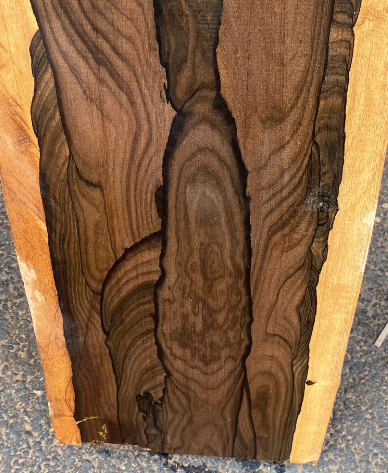
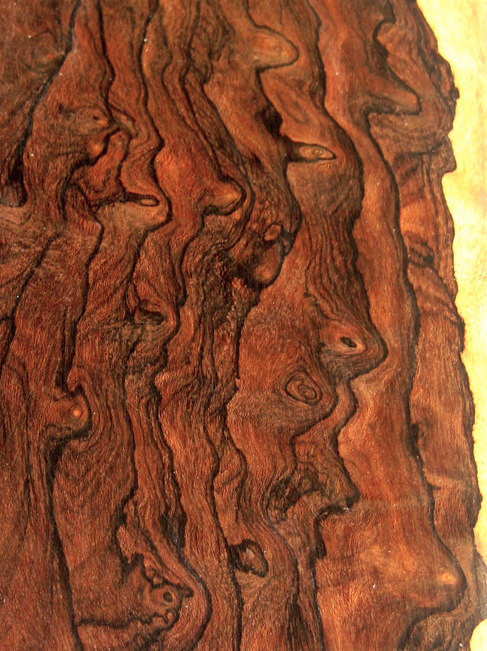
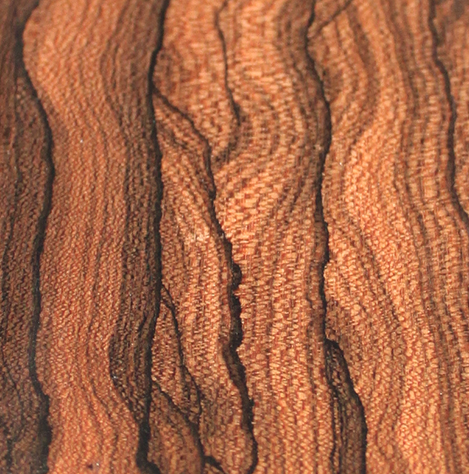
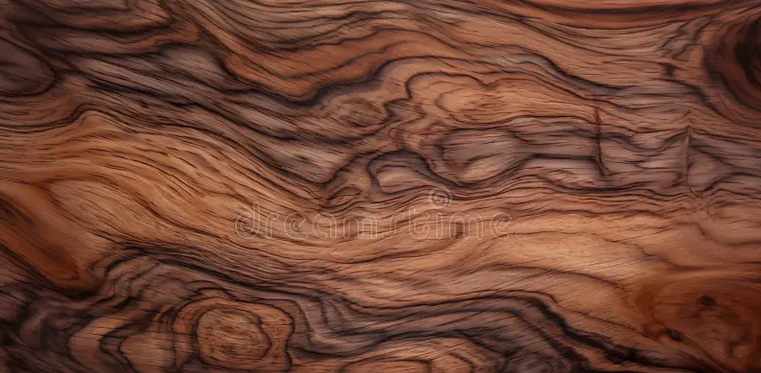
ne of the most visually dramatic and technically unique hardwoods in the world. It is often compared to Ziricote (Cordia elaeagnoides), but the Yucatecan Siricote has its own distinct personality. Maybe its most famous attribute, the grain is highly irregular and frequently features "landscape" or "spider-web" grain patterns. It often displays wild, swirling growth rings that create "islands" or cathedral patterns. In high-quality heartwood, these look like topographical maps or ink-wash paintings.
The heartwood is a deep brownish-gray to "tobacco" brown, heavily interlaced with irregular black ink-like streaks (growth rings). There is a very sharp, dramatic demarcation between the dark heartwood and the creamy, yellowish-white sapwood. While the grain is wild, the actual fiber distribution is relatively uniform, which allows it to take a very smooth finish. It has a natural, subdued waxy luster. Because of its high oil content, it can be polished to a high sheen without much chemical intervention. It is a diffuse-porous wood with medium-sized pores. These pores are often filled with dark deposits, contributing to the "inky" look of the grain.