Blue Morning Glory
| Scientific name | Mayan name | Español | English |
|---|---|---|---|
| Ipomoea tricolor | Ulu-um Ja | Campanilla | Blue Morning Glory |
The morning glory is particularly significant in the Yucatan during the months leading up to Hanal Pixán. The blooming of the blue Ulu'um ja' is often seen as a signal that the rainy season is ending and the spirits are nearing.
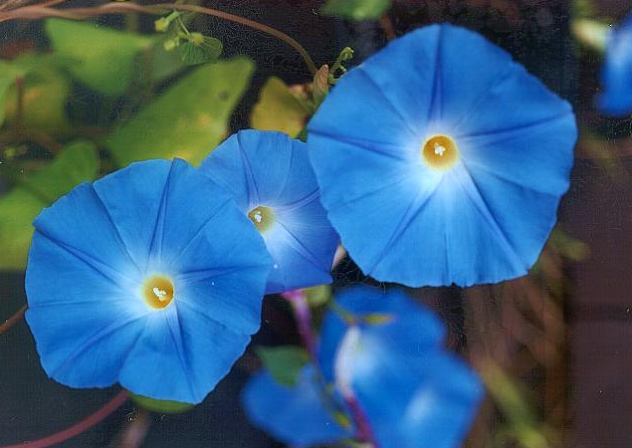
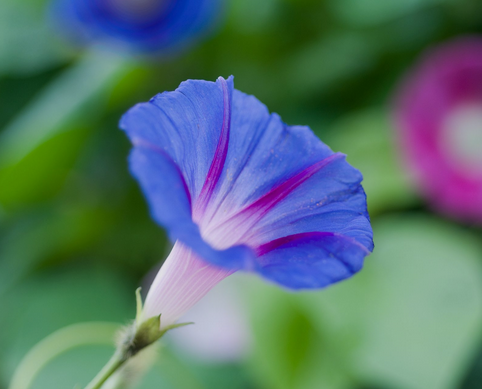
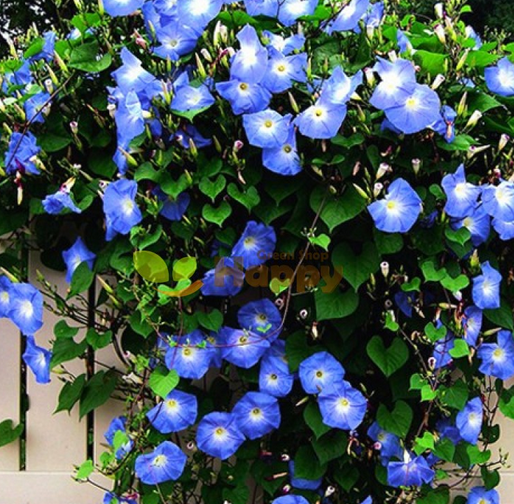
pomoea tricolor is a vigorous, twining perennial vine characterized by its lush, heart-shaped leaves and spectacular trumpet-shaped flowers. The blooms are famous for their "heavenly" azure-blue petals that transition into a creamy white or pale yellow throat. These flowers follow a distinct daily rhythm: they unfurl at dawn to reveal their most intense color, then gradually fade to a soft pinkish-purple by afternoon before wilting completely. In the limestone-rich soils of the Yucatan, the vine often forms dense, cascading mats over stone walls and forest edges, creating vibrant blue curtains that stand out sharply against the deep green tropical foliage.
In Yucatecan culture, the plant is a symbolic marker of the transition between seasons and worlds. Its arrival is deeply tied to the end of the rainy season and the preparation for Hanal Pixán, where its blue blooms are seen as a celestial greeting for returning souls. Beyond its spiritual associations, the species belongs to a family of morning glories historically significant to the Maya for their entheogenic properties; the seeds, known as tlitliltzin in related M exican traditions, were used in ritual divination to communicate with the divine. Today, it remains a beloved aesthetic staple of the Yucatecan landscape, celebrated as a living representation of the sky mirrored in the earth.
Gallery