Firecracker Plant
| Scientific name | Mayan name | Español | English |
|---|---|---|---|
| Russelia equisetiformis | Tzunuum-xiw | Lluvia de Coral | Firecracker Plant |
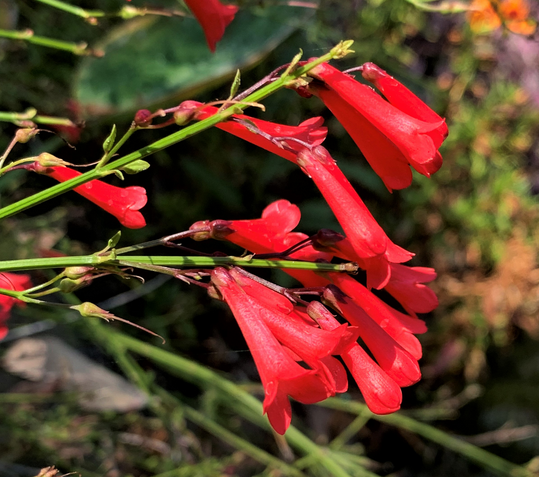
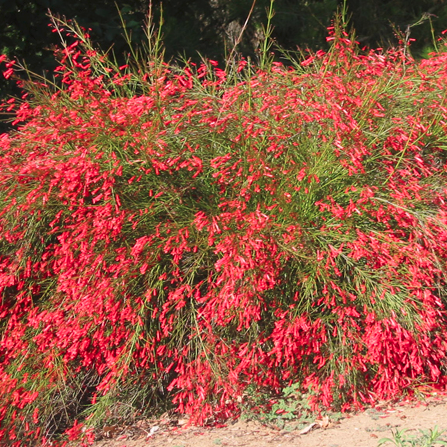
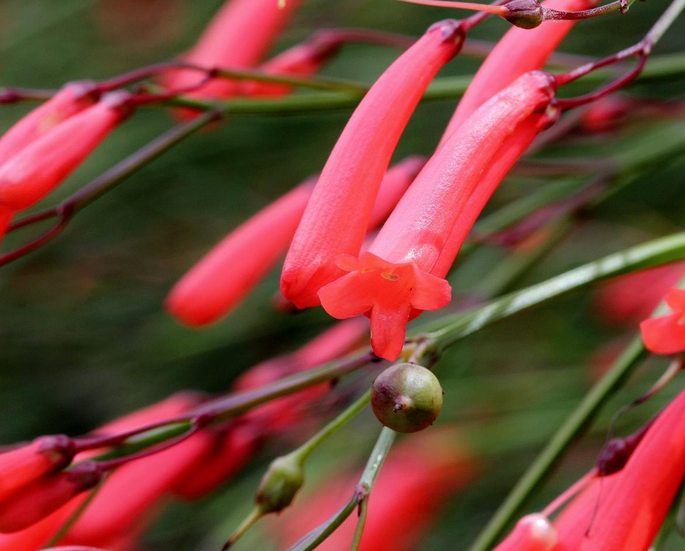
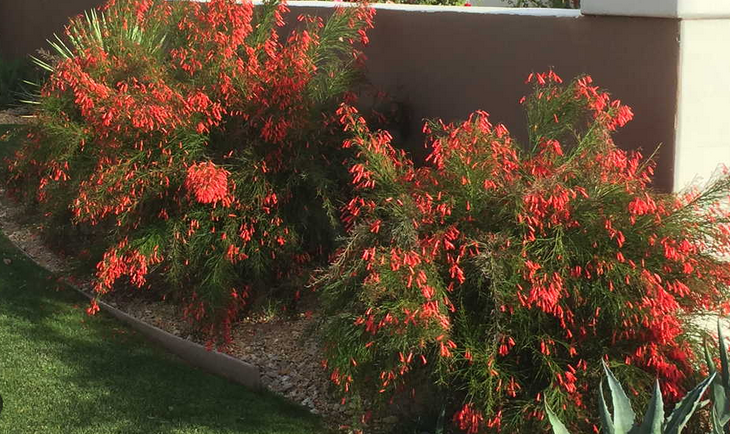
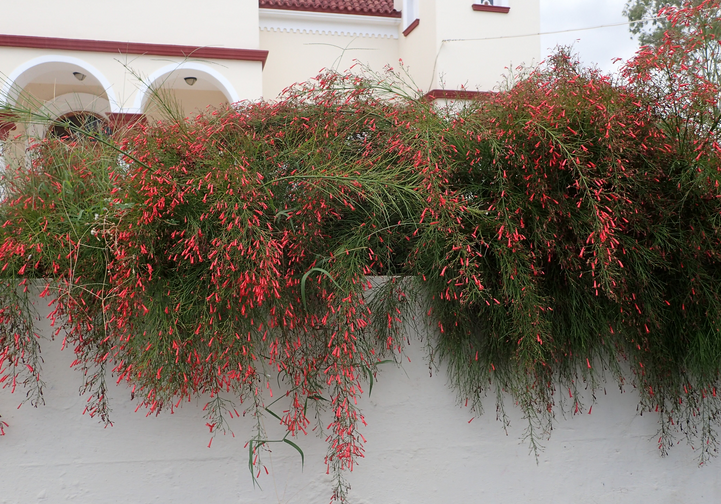
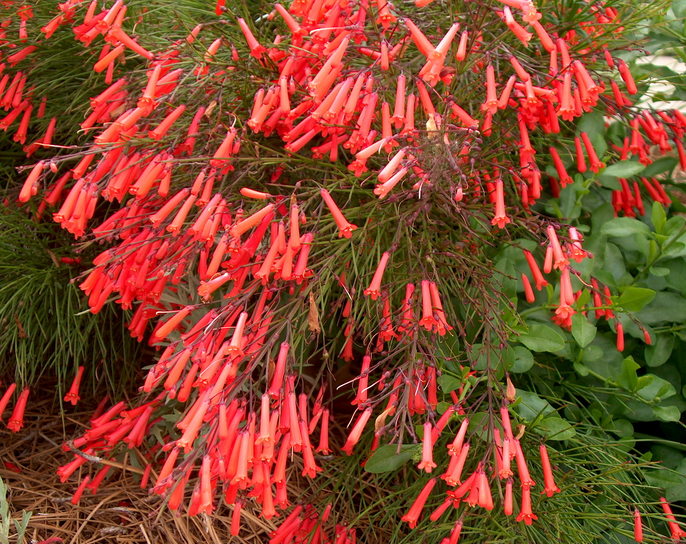
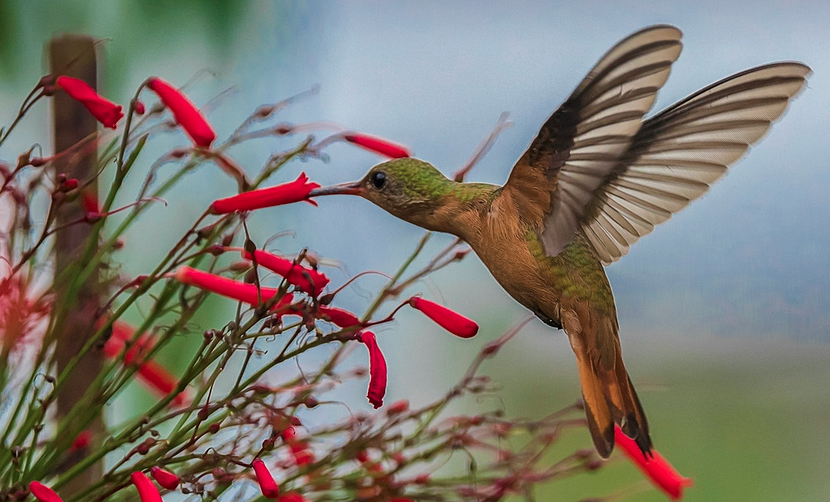
Known locally as Lluvia de Coral or Lluvia de Fuego, its cascading stems are covered in tiny, bright red tubular flowers that are irresistible to nearly all local hummingbird species. The flowers of Russelia equisetiformis, commonly known in English as the Firecracker Plant, look like a cascade of tiny, bright red tubes hanging from thin, grass-like stems. Each blossom is about an inch long and ends in five small, rounded lobes that flare out slightly at the opening, much like the end of a trumpet. These flowers grow in dense, weeping clusters that give the plant its characteristic "firework" appearance. Because the petals are fused into a long, narrow pipe, the nectar is hidden deep at the base, making it a specialized food source that only hummingbirds or insects with long mouthparts can reach. Unlike many other plants, this one has tiny, scale-like leaves, so the vibrant red flowers really stand out against the green, wire-like branches.
This plant is essentially a "nectar factory" for the smaller hummingbirds of the peninsula. Because the flowers are small, narrow tubes, they are perfectly sized for the Canivet’s Emerald (Cynanthus canivetii) and the Mexican Sheartail (Doricha eliza).
The Flowers